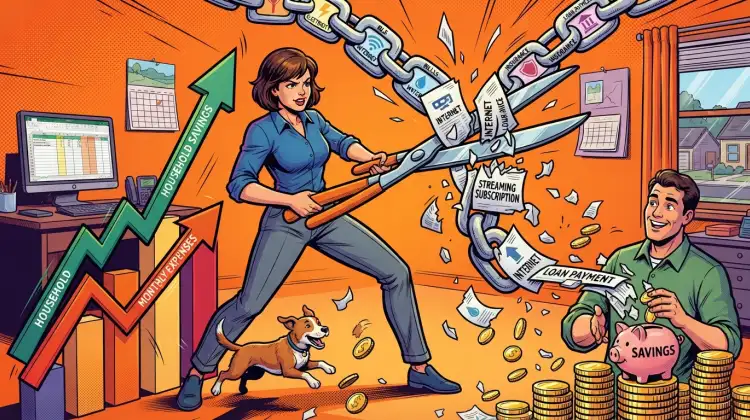
Recurring bills are the quiet drain on most household budgets. Unlike one-time purchases, they renew automatically, often at prices that creep upward year after year. According to the Bureau of Labor Statistics, the average American household spends tens of thousands of dollars annually, and a large share of that goes to fixed and recurring obligations such as housing, utilities, insurance, and telecommunications. Because these charges repeat, even a modest reduction compounds into meaningful savings over twelve months. This guide walks through a systematic approach to cutting recurring bills without sacrificing the services you actually value.
Start With a Complete Bill Inventory
You cannot cut what you cannot see. Before negotiating or canceling anything, build a single list of every recurring charge that hits your accounts. Pull the last two months of bank and credit card statements and highlight anything that repeats.
- Housing and utilities: rent or mortgage, electricity, gas, water, internet, trash.
- Insurance: auto, homeowners or renters, life, umbrella.
- Telecom: cell phone plan, landline, streaming and cable bundles.
- Subscriptions: streaming video and music, software, cloud storage, gym, meal kits, news.
- Debt and fees: loan payments, annual credit card fees, bank maintenance fees.
Note the amount, billing cycle, contract end date, and whether the price is promotional. Many promotional rates expire silently, which is one of the most common reasons bills rise.
Audit Subscriptions and Cancel What You Don't Use
Subscription creep is well documented. A 2022 survey by C+R Research found that consumers underestimated their monthly subscription spending by roughly $133, and many had subscriptions they had forgotten about entirely. Go through your list and mark each service as use regularly, use occasionally, or forgot I had it.
For the forgotten category, cancel immediately. For occasional use, consider rotating services rather than paying for all of them at once — subscribe to one streaming service for a few months, then switch. Also check whether you are paying for overlapping services, such as two cloud storage plans or a music subscription bundled into a phone plan you already pay for.
Negotiate and Shop Around on Telecom and Insurance
Telecom and insurance are the two categories where a single phone call often produces the largest savings. Providers frequently reserve better rates for new customers, so ask directly for the retention or loyalty department and request the current promotional price.
Phone and internet
Compare your current plan against competitors' published rates. If you are out of contract, you have leverage. Ask about autopay and paperless billing discounts, which commonly save $5 to $10 per line per month. If you own your phone outright, confirm you are not still paying an equipment installment charge.
Insurance
Get at least three quotes at each renewal. Raising your deductible, bundling auto and home policies, and asking about safe-driver or low-mileage discounts can lower premiums. The Insurance Information Institute notes that shopping around is one of the most effective ways to reduce auto insurance costs, since premiums for identical coverage vary substantially between insurers.
Reduce Utility and Household Costs
Utilities respond well to both behavior changes and small investments. The Department of Energy estimates that heating and cooling account for roughly half of home energy use, so a programmable thermostat set a few degrees lower in winter and higher in summer produces measurable savings.
- Ask your utility about budget billing to smooth seasonal spikes and about time-of-use rates if you can shift heavy usage.
- Request an energy audit, often free or low-cost through utilities, to find leaks and inefficient appliances.
- Replace incandescent bulbs with LED bulbs, which use up to 75% less energy.
- Call your internet provider annually and ask for the current customer rate; loyalty pricing is rarely automatic.
For water and trash, check whether your municipality offers a lower tier for reduced usage or a smaller bin.
Use Automation and Annual Reviews to Keep Bills Down
Savings erode if you do not revisit them. Set a calendar reminder to review every recurring bill once a year, ideally a month before each contract renews. Use your bank's alerts or a subscription-tracking app to flag price increases. Where possible, pay annual instead of monthly when the discount is meaningful, but only if you have the cash set aside and the refund policy is fair. Finally, call your bank and ask them to waive maintenance fees or to move you to a no-fee account — many institutions will do this on request.
The Short Version
Cutting recurring bills starts with visibility: list every repeating charge, then attack the categories with the most room to move. Cancel forgotten subscriptions, negotiate telecom and insurance at renewal, and trim utility usage with low-cost fixes. Automate annual reviews so promotional rates do not quietly expire. Households that follow this process routinely shave hundreds of dollars a year without giving up the services they rely on.