Building a savings plan is less about willpower and more about structure. A savings plan is a written system that connects your income to specific goals, sets a realistic monthly amount, and moves money automatically so you are not relying on good intentions at the end of the month. Whether you are starting with a $500 emergency fund or saving for a down payment, the mechanics are the same: know your cash flow, define your targets, pick the right accounts, and automate the transfers.
Start With a Clear Picture of Your Cash Flow
You cannot plan savings without knowing what is left after expenses. Pull the last two to three months of bank and credit card statements and group spending into fixed costs (rent, insurance, loan payments), variable needs (groceries, utilities, gas), and discretionary spending (dining out, subscriptions, travel). The Federal Reserve's Survey of Consumer Finances consistently shows that a large share of U.S. households hold less in liquid savings than they would need to cover a few months of expenses, so treat this step as diagnostic rather than judgmental.
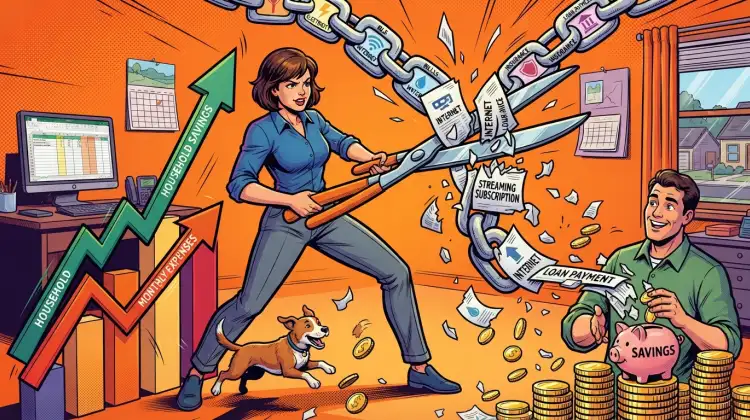
Once you have totals, subtract fixed and variable needs from take-home pay. That remainder is your savings capacity. If the number is small or negative, focus first on trimming recurring charges and high-interest debt payments, because a savings plan built on a negative cash flow will fail within a month or two.
Set Specific Goals With Dollar Amounts and Deadlines
Vague goals like "save more" do not produce transfers. Convert each goal into a target amount and a date, then divide:
- Emergency fund: Three to six months of essential expenses is the common benchmark. On $3,000 of monthly essentials, that is $9,000 to $18,000.
- Short-term goals (under two years): Car repairs, a security deposit, holiday spending. Keep these in cash.
- Medium-term goals (two to seven years): A home down payment or a career-change cushion. High-yield savings or certificates of deposit fit here.
- Long-term goals: Retirement belongs in tax-advantaged accounts such as a 401(k) or IRA, not a savings account.
Rank goals by priority. Most planners recommend funding a starter emergency fund of $1,000 to $2,000 before aggressive debt payoff, then building the full fund while capturing any employer 401(k) match, which is an immediate return on your contribution.
Choose the Right Accounts for Each Goal
Where you keep savings matters as much as how much you save. Compare account types by purpose:
- High-yield savings accounts (HYSA): FDIC-insured, liquid, and typically paying well above the national average. Best for emergency funds and goals under two years.
- Certificates of deposit (CDs): Fixed rates for a fixed term, insured by the FDIC up to $250,000 per depositor, per bank, per ownership category. Useful when you know you will not touch the money before maturity.
- Money market deposit accounts: Similar insurance and liquidity to savings accounts, sometimes with check-writing.
- Treasury securities: Backed by the U.S. government and available through TreasuryDirect; short-term bills can be competitive for money you will need within a year.
Verify FDIC insurance through the FDIC's BankFind tool before opening an account, and remember that investment products are not FDIC-insured, so do not park an emergency fund in the stock market.
Automate Transfers and Build a Monthly Savings Budget
The most reliable savings plans remove the decision from your day. Set a recurring transfer from checking to savings for the day after each paycheck, starting with an amount you can sustain. Even $50 per paycheck compounds into a habit and a balance. Increase the transfer whenever income rises — a raise, a bonus, or the end of a loan payment.
Treat the transfer like a bill in your monthly budget. Many banks let you create multiple savings buckets or sub-accounts, which keeps the emergency fund separate from the vacation fund and prevents accidental spending. If your employer offers direct deposit split across accounts, route a fixed portion straight to savings so the money never touches checking.
Track Progress and Adjust Quarterly
Review your plan every three months. Check whether balances are on pace for each goal's deadline, whether your emergency fund still matches three to six months of current expenses, and whether any account is earning a rate well below what comparable HYSAs or CDs offer. Rebalance priorities as life changes — a new job, a move, or a child shifts both expenses and targets.
Keep the plan simple enough to maintain. Two or three goals, one automated transfer per paycheck, and a quarterly check-in cover most households. The Consumer Financial Protection Bureau offers free budgeting tools and worksheets if you want a structured template.
What to Remember
Building a savings plan works when it is concrete: measure your cash flow, attach dollar amounts and dates to goals, match each goal to an FDIC-insured or tax-advantaged account, and automate the transfers so saving happens before spending. Start with a small emergency fund, capture any employer retirement match, and revisit the plan quarterly. The amount matters less than the system — a modest automated plan you keep beats an ambitious one you abandon.