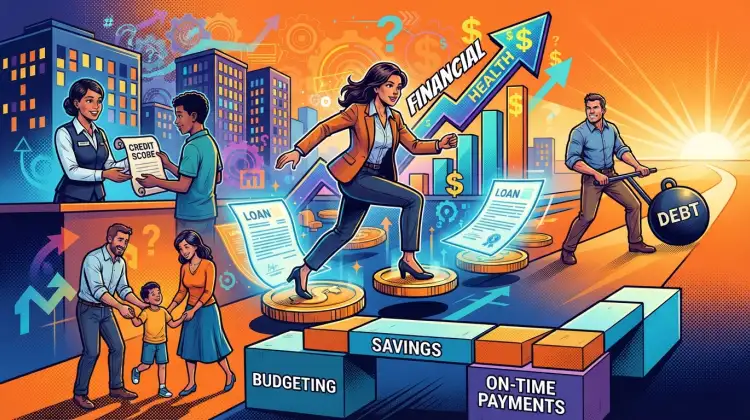
Understanding loan terms is the difference between a manageable monthly payment and years of avoidable cost. Every loan you are offered—whether a mortgage, auto loan, personal loan, or credit card—comes wrapped in a contract that defines exactly how much you will pay, when, and under what conditions. This guide explains the key terms you will encounter, how they interact, and how to compare offers on equal footing.
Interest Rate vs. APR: The Most Misread Pair
The interest rate is the cost of borrowing the principal, expressed as an annual percentage. The annual percentage rate (APR) is broader: under the federal Truth in Lending Act (Regulation Z), lenders must disclose an APR that incorporates the interest rate plus most fees and charges, expressed as a yearly rate. That makes APR the better apples-to-apples comparison tool.
The gap between the two tells you something useful. A loan with a 6% interest rate and a 7.5% APR carries meaningful upfront costs. A loan where the two are nearly identical has low fees. Note that APR assumes you hold the loan to maturity, so it understates the cost of a loan you plan to repay early—check for prepayment penalties before assuming you can refinance cheaply.
Principal, Term, and Amortization
The principal is the amount you borrow, excluding interest and fees. The term is how long you have to repay it. These two numbers, combined with the rate, determine your payment.
- Short terms mean higher monthly payments but far less total interest. A $20,000 auto loan at 7% over 36 months costs roughly $2,100 in interest; stretched to 72 months, it costs about $4,300.
- Long terms lower the payment but increase total cost and the risk of being "upside down" on a depreciating asset.
- Amortization describes how each payment splits between interest and principal. Early payments are interest-heavy; principal repayment accelerates over time.
For mortgages, ask for the amortization schedule in writing. It shows exactly how much principal you will have paid off after five or ten years—often less than borrowers expect.
Fees, Penalties, and Escrow
Fees are where loan terms get expensive. Common charges include origination fees (typically 1%–6% of the loan amount on personal loans), application fees, and late fees. For mortgages, you will also see closing costs, discount points (an upfront payment to buy down the rate), and escrow requirements—monthly amounts collected to pay property taxes and homeowners insurance.
Watch for these contractual provisions:
- Prepayment penalty: a fee for paying off early. Common in some auto and personal loans; rare on mortgages but worth confirming.
- Variable vs. fixed rate: a variable rate can rise after an introductory period. Ask what index it follows and how often it can adjust.
- Balloon payment: a large lump sum due at the end of the term, common in some seller-financed or business loans.
- Late payment terms: the grace period, the fee amount, and whether a late payment triggers a penalty rate.
How to Compare Loan Offers Properly
Lenders are required to give you a Loan Estimate within three business days of a mortgage application, and a Closing Disclosure at least three business days before closing; for other consumer loans, the Truth in Lending disclosure shows the APR, finance charge, amount financed, and total of payments. Use these documents side by side.
- Compare APR, not just the advertised rate.
- Add up all fees to get the true cost of borrowing.
- Model the total of payments over the full term.
- Check whether the payment is fixed or adjustable.
- Confirm there is no prepayment penalty if you plan to pay early.
Also consider the debt-to-income ratio lenders use: most conventional mortgages allow a total DTI around 43%–50%, and a new loan payment that pushes you past that threshold can hurt approval odds and pricing. Pull your credit reports free at AnnualCreditReport.com and check your FICO or VantageScore before applying—a higher score can lower your rate by a meaningful margin over the life of a loan.
What to Remember
Loan terms are not fine print—they are the price of the money you are borrowing. Focus on the APR rather than the headline rate, understand how the term length changes total cost, and read every fee and penalty clause before signing. Comparing at least three offers using standardized disclosures is the single most reliable way to protect your long-term financial health and avoid paying more than you need to.