Investing is the process of putting money into assets with the expectation that it will grow over time. For beginners, the goal isn't to pick the next hot stock — it's to understand a few core concepts, choose low-cost investments, and let time and compounding do most of the work. This guide covers the essentials: how markets work, what you can own, how risk and return relate, and how to get started with as little as a few hundred dollars.
Why Investing Beats Saving Alone
Saving protects money you'll need soon. Investing is for money you won't need for years, and it exists because cash loses purchasing power to inflation. The Federal Reserve generally targets 2% annual inflation, which means money sitting in a checking account quietly shrinks in real terms. Historically, broad U.S. stock market returns have averaged roughly 10% per year before inflation over long periods, though returns vary widely year to year and past performance never guarantees future results.
The engine behind long-term growth is compounding. If you invest $5,000 and earn 7% annually, you'll have about $9,835 after 10 years and roughly $19,350 after 20 years — without adding another dollar. Add $200 a month and the totals climb substantially higher, because each new contribution also earns returns.
The Main Asset Classes, Explained
Almost every investment falls into one of a few categories. Understanding them helps you build a portfolio that matches your timeline and comfort with risk.
- Stocks (equities): Partial ownership in a company. Stocks offer the highest long-term growth potential but can fall sharply in the short term. A single company can fail; a broad basket of companies historically has not.
- Bonds (fixed income): Loans to governments or corporations that pay interest. U.S. Treasury securities are backed by the federal government, while corporate bonds carry more credit risk. Bonds typically cushion a portfolio when stocks fall.
- Mutual funds and ETFs: Baskets of stocks, bonds, or both. Exchange-traded funds (ETFs) trade like stocks during the day; mutual funds trade once daily at the closing price.
- Cash equivalents: Savings accounts, money market funds, and Treasury bills. Low risk, low return — best for emergency funds and short-term goals.
Index Funds: The Beginner's Default Choice
Most beginners are best served by low-cost index funds, which track a market index rather than trying to beat it. A total U.S. stock market index fund holds thousands of companies in one purchase, giving instant diversification. A target-date fund automatically shifts from stocks toward bonds as your retirement date approaches.
Costs matter enormously. Expense ratios on index funds are often 0.03% to 0.10% per year, while actively managed funds frequently charge 0.50% to 1.00% or more. On a $50,000 balance, the difference between a 0.05% and a 1.00% expense ratio is roughly $475 per year — money that compounds against you over decades. Watch for sales loads (commissions) and high advisory fees as well.
Risk, Diversification, and Your Time Horizon
Risk and return are linked: higher expected returns require accepting more volatility. The single most important variable for beginners is the time horizon. Money needed within two to three years belongs in cash or short-term bonds. Money for retirement decades away can reasonably be invested mostly in stocks, because there's time to recover from downturns.
Diversification spreads risk across asset classes, sectors, and geographies. A simple two- or three-fund portfolio — a total stock market fund, an international fund, and a bond fund — captures most of the benefit with minimal complexity. Rebalancing once a year keeps your mix aligned with your plan.
How to Start Investing Step by Step
- Build an emergency fund covering three to six months of expenses in a high-yield savings account.
- Capture free money first. If your employer offers a 401(k) match, contribute at least enough to get the full match — it's an immediate return you won't find anywhere else.
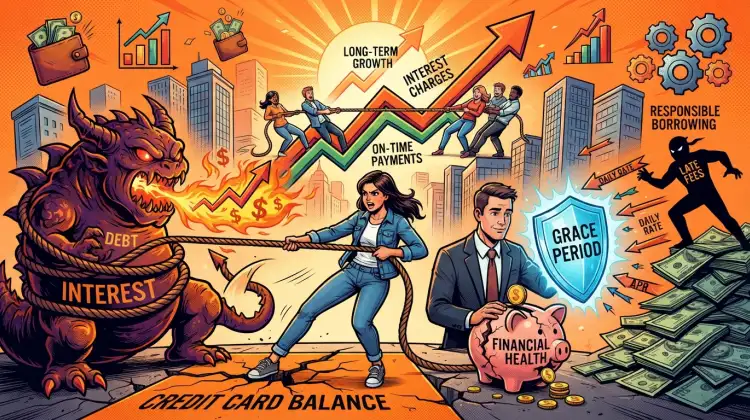
- Pay down high-interest debt such as credit cards, where rates often exceed 20%.
- Open an account. Options include a workplace 401(k), a traditional or Roth IRA, or a taxable brokerage account. In 2025, IRA contribution limits are $7,000 ($8,000 if age 50 or older).
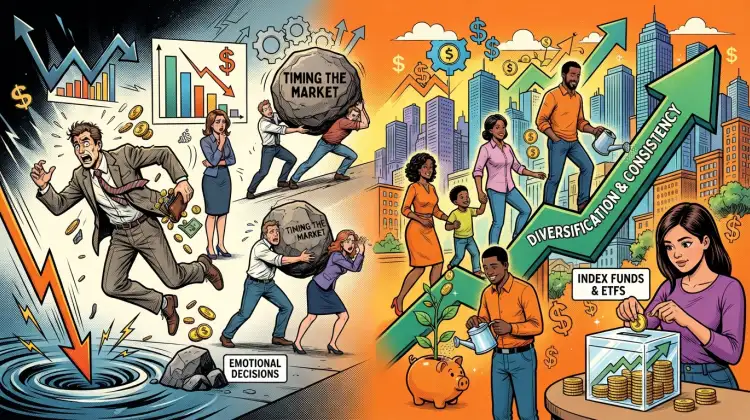
- Choose low-cost index funds and set up automatic monthly contributions. Consistency matters more than timing.
- Leave it alone. Avoid reacting to headlines; time in the market historically beats timing the market.
Beginners should also verify that any broker or advisor is registered using the SEC's Investor.gov database, and understand that the Securities Investor Protection Corporation (SIPC) protects brokerage accounts up to $500,000 against broker failure — not against market losses.
What to Remember
Investing success for beginners comes down to a handful of habits: start early, keep costs low, diversify broadly, contribute automatically, and stay invested through volatility. You don't need to predict markets or pick winning stocks. A simple portfolio of low-cost index funds, held for the long term inside a tax-advantaged account, is a proven approach for everyday investors building wealth.